
Getting someone out: $80–$180
Standard Sydney call-out for after-hours attendance. Ask before booking, not after the invoice.
Genuine round-the-clock cover across Bondi. You get an honest ETA rather than a flattering one, a fixed price before work starts, and on the calls that can safely wait, you get told that too.
After-hours work is not the same trade as daytime work. The parts have to be on the van because no supplier is open, the diagnosis has to be right first time because there is no second attendance that night, and the person answering the phone has to be able to tell a genuine emergency from something that is cheaper on Monday.
That last part matters more than it sounds. Telling you a job can safely wait costs us the callout and saves you a premium, and it is the fastest way to know whether the outfit you have rung is worth using again.


Decades of salty coastal air take their toll on ageing pipes, leading to cracks and blockages. CCTV shows us exactly where.
Salt air shortens the life of everything metal on the outside of a house: tap spindles, external copper, hot water casings and the fixings holding them up. It is slow and even rather than dramatic, which is exactly why it tends to be noticed all at once.
The emergency version is usually an external fitting letting go. Isolating at the meter stops it immediately, and the replacement should be specified for the environment rather than like-for-like.
If the fault turns out to need digging, loose ground changes the job: trench walls do not hold, so a hole that would stand unaided elsewhere needs shoring, and that is not after-hours work.
What tonight can do is clear, camera and make safe. Anything structural gets scoped properly in daylight, and we would rather say that than start something at 11pm that cannot be finished safely.
Bondi’s many blocks of flats share drainage, so one blockage can affect several units. A camera pinpoints the problem fast.
Before anything else, work out whether the failure sits inside your lot or on common property, because that decides who authorises the work and who is billed. As a rule of thumb: a fixture, a tap or pipework serving only your apartment is usually yours; a stack, a shared sewer line or a stormwater pit serving the building is usually the owners corporation's.
If it is after hours and the building manager is unreachable, we attend, make it safe, and write the report so it names the line and the lot. That report is what settles the invoice question later, and it is far easier to produce on the night than to reconstruct a fortnight afterwards.
Around Bondi we work with premises where closing for a day is not a small inconvenience — it is the week's takings and a shift's wages.
The Campbell Parade strip is packed with eateries, and fats and oils set hard in the pipes. We clear grease-choked lines and keep them flowing.
So we work to the opening time, not to ours. That means arriving after close where that suits you better, telling you early if the fix will not hold until trade, and giving you the documentation your insurer or landlord will ask for afterwards.
Ground close to the water holds more of it, sits lower, and moves more than ground further up. Over decades that shows up in the drainage as joints that have opened slightly, falls that have flattened, and lines that silt where they once ran clean.
So close to the beach, fine sand and grit wash into stormwater and sewer lines and build up over time, a classic Bondi cause of slow, blocked drains.
None of that is an emergency by itself. It is the reason an emergency here often turns out to be the last stage of something that has been developing quietly, and why the camera run after the clear is worth more than the clear.
A tank or heat pump mounted where it copes with salt-laden air works harder for its life than the same unit further inland. Casings corrode, the sacrificial anode goes sooner than the manual suggests, and failure arrives earlier than the warranty implies.
A leaking tank under pressure is not something to open up. Shut its cold-water isolation valve if you can reach it safely, and leave the rest to the visit.
A café or kitchen with a backed-up floor waste has a different problem from a household. There is a health standard to meet, staff arriving in a few hours, and a grease line that has usually been narrowing for months before the night it finally closes over.
We clear and jet trade waste lines after hours specifically so premises open on time, and we will tell you honestly whether tonight buys you a week or a year. If the line is glazed hard with old fat, the answer is a scheduled jet and a service interval — not another call-out at emergency rates next month.
Standard Sydney call-out for after-hours attendance. Ask before booking, not after the invoice.
Roughly $120–$160 in daylight. Someone is out of bed and on the road, and the rate reflects it.
Where most single-fault after-hours jobs land once attendance, labour and small parts are counted.
Slab leaks, gas line work, anything that means opening a wall overnight. You approve the figure first.
We would rather book you for Monday at daylight rates than take a premium for a job that was never urgent.
These are market ranges, not our quote. You hear your number first and decide with it in front of you. Figures here are indicative of the 2026 Sydney market rather than a quote from us, you get your own number as a fixed price before any work starts.

Not a call centre. You describe what is happening, we tell you what to shut off right now, and whether this genuinely needs someone tonight. Sometimes it does not, and we say so.
The nearest available crew heads for Bondi with the common failure points already stocked on the van: pipe, fittings, valves, drain gear.
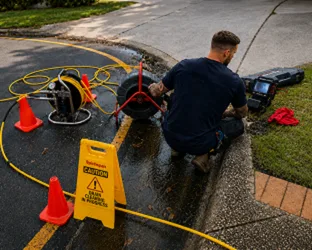
First job on site is stopping the damage: isolate, contain, make safe. Then you get a fixed price for the proper repair before it starts.

Most emergencies are permanently repaired on the spot. If a part has to wait for a supplier, you are left safe, watertight and functioning in the meantime.
Call and describe it. If it can hold, we will tell you, and book you at daytime rates. If it cannot, you will be glad you rang tonight.
Cost, response times, and what actually counts as an emergency.
Call for the fastest response, any hour. Or send the form, after-hours enquiries get a callback from the on-call plumber, not an inbox.

Leave your details and our local Bondi team will call you back fast.